

A website can attract traffic and still produce few leads when its message is unclear, its pages attract the wrong visitors, trust signals are weak, or contacting the business feels difficult. Stronger positioning, service content, calls to action, forms and tracking can improve lead generation.
Why Website Traffic Is Not Enough
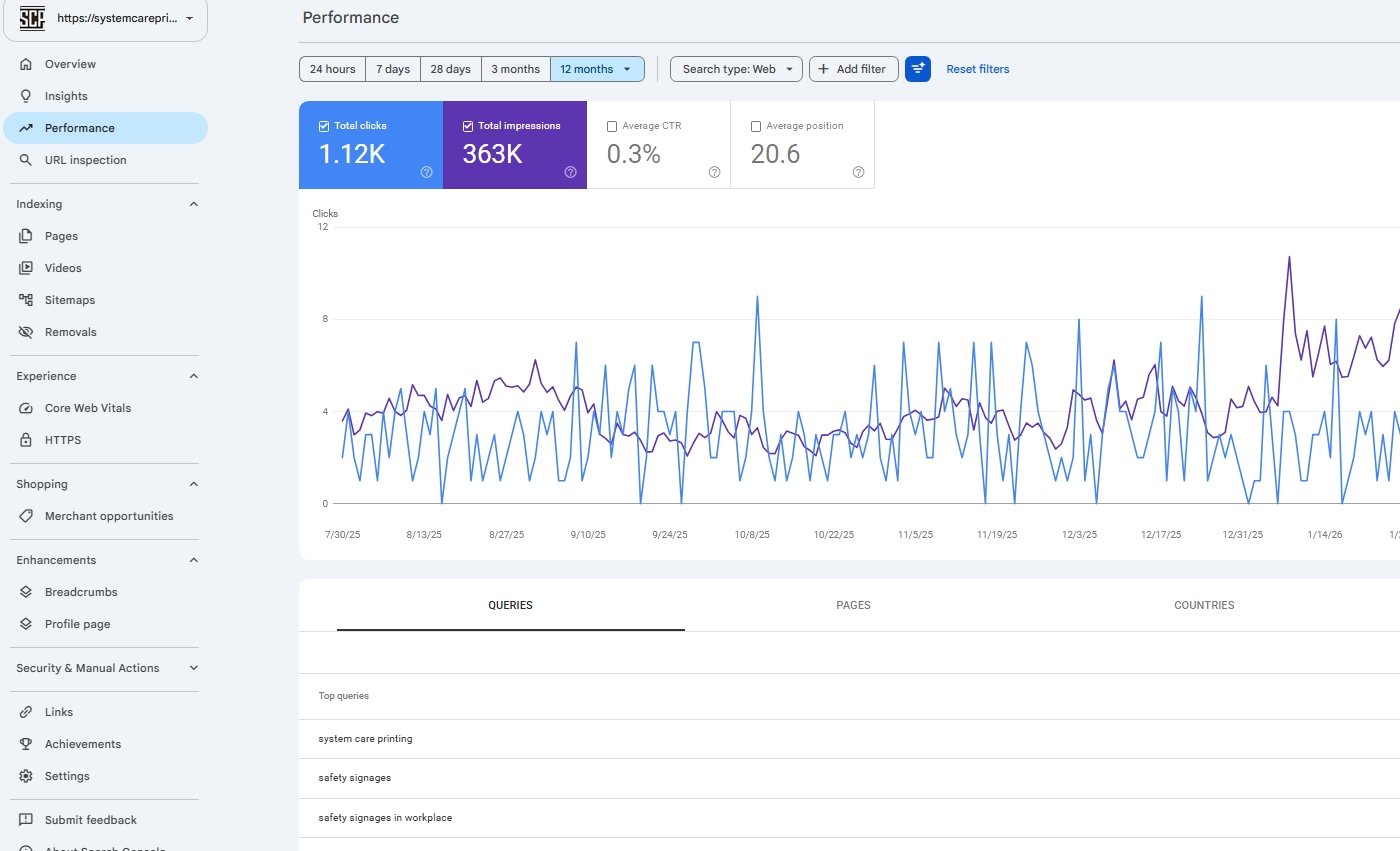
Website traffic tells you that people arrived. It does not tell you whether they were the right people, understood your offer, trusted your business or found a clear reason to contact you.
Many business owners open an analytics report, see that sessions have increased and assume their website is moving in the right direction. That may be true, but traffic alone is not a business outcome.
A visitor may arrive through an informational blog post, read one paragraph and leave. Another may reach a service page, fail to understand what is included and return to Google. A third may be ready to enquire but cannot find a clear phone number or simple form.
All three visits count as traffic. None necessarily creates revenue.
A weakness at any stage can reduce results. Strong rankings cannot compensate for an unclear offer. Attractive design cannot fix irrelevant traffic. A completed form has little value when the lead is not followed up quickly.
Important takeaway
Traffic is an input rather than the final result. A lead-generating website connects visibility, relevance, trust, action and follow-up as one customer journey.
Why Business Websites Fail to Generate Leads
Low lead volume is rarely caused by one button or one headline. Several small problems usually work together to create confusion, hesitation or unnecessary friction.
The main message is too broad
Statements such as “quality solutions,” “trusted service” or “we care about our customers” do not tell a visitor who you help, what you provide or why your offer is relevant. A customer should understand the core value of the page within a few seconds.
The website attracts the wrong visitors
Traffic may come from broad informational keywords, unrelated topics or locations outside your service area. Effective SEO should attract people who are likely to need your services, not simply increase the number shown in an analytics dashboard.
Service pages are too thin
A short paragraph and a contact button rarely answer enough buying questions. Visitors want to understand what the service includes, who it is suitable for, how the process works and what happens after they make contact.
Trust signals are weak or hidden
Customers may hesitate when they cannot find genuine reviews, project examples, credentials, team information, policies or clear business details. Trust is especially important for local, technical and high-value services.
The next step is unclear
Some websites show several competing calls to action. Others hide the contact button or use vague text such as “Learn more.” Each important page should guide the visitor toward one obvious primary action.
The enquiry process feels difficult
Long forms, broken booking calendars, required account creation and poor mobile usability can stop a motivated customer. Ask only for the information needed to begin a useful conversation.
Mobile visitors receive a weaker experience
Many service customers search while away from a desktop. Small buttons, crowded sections, slow-loading images and difficult forms can turn mobile traffic into lost opportunities.
Lead tracking is incomplete
Calls, forms and bookings may happen without being attributed to the correct page or source. Without reliable tracking, it becomes difficult to identify what produces valuable leads and what merely produces visits.
What a High-Converting Service Business Website Needs
A high-converting website does not pressure every visitor into making an immediate purchase. It helps the right customer feel understood, informed and confident enough to take the next step.
Start with a clear value proposition
The opening section should explain what the business provides, who it helps and why the service matters. A local contractor should not lead with a generic statement about excellence. The page should identify the type of work, service area and customer outcome clearly.
Clear messaging also helps search engines and AI systems understand the purpose of the page. This strengthens the connection between what the business offers and what a potential customer is trying to find.
Create dedicated pages for important services
One general services page is rarely enough for a business offering several distinct solutions. Each important service should have a focused page that addresses the questions customers are likely to ask before contacting the business.
A strong service page may explain:
- Who the service is designed for
- The problem or need it addresses
- What is included
- How the process works
- Common pricing factors
- Relevant locations or service areas
- Examples, reviews or proof
- The next action the customer should take
YeasinWEB approaches WordPress website design as a customer journey rather than a collection of attractive sections. Each page should support a clear business purpose.
Place proof near the decision
Trust signals work best when they appear near the statement or action they support. A testimonial about response time can appear near a booking form. A relevant project example can appear inside a service page rather than being hidden in a separate portfolio.
Useful trust elements include:
- Named customer testimonials
- Before-and-after examples
- Case studies with clear context
- Professional certifications
- Industry memberships
- Secure payment and privacy information
- Real founder or team information
- Consistent contact and business details
Expert tip
Do not place every trust signal in one section called “Why choose us.” Add relevant evidence throughout the page, particularly near important claims, contact forms and calls to action.
Use one clear primary action
Each page should guide visitors toward one main next step. That might be requesting an estimate, booking a consultation, calling the business or starting a free website audit.
Secondary options can still exist, but they should not compete equally with the primary action. A customer should not need to study the page to work out what to do next.
Keep the initial form simple
Forms should collect enough information to begin the conversation without creating unnecessary resistance. A name, contact detail, service type and short message are often enough for an initial enquiry.
More detailed questions can be asked later in the qualification process. A form that feels like a full application may reduce submissions, particularly on mobile devices.
| Area | Weak website | High-converting website |
|---|---|---|
| Hero message | Uses broad claims without explaining the service or customer. | States the service, audience, location and benefit clearly. |
| Service content | Provides short descriptions with little practical information. | Answers common buying questions and explains the process. |
| Trust | Uses unsupported claims such as “best” or “leading.” | Uses reviews, examples, credentials and clear business information. |
| Calls to action | Shows several competing or vague buttons. | Uses one clear primary action throughout the page. |
| Forms | Requests too much information before the first conversation. | Collects only what is needed to begin the process. |
| Tracking | Measures visits without measuring enquiries or lead quality. | Tracks calls, forms, bookings and qualified opportunities. |
The Role of SEO, Local Visibility and AI Search
Conversion improvements matter only when suitable people discover the website. Search visibility and website conversion should therefore be planned as connected parts of the same growth system.
Attract visitors with the right intent
An educational article may attract a large audience, while a focused service page may receive fewer visits and produce more enquiries. A useful content strategy needs both.
Informational content helps potential customers understand a problem. Commercial pages help them compare solutions and decide whether to make contact. Internal links should connect these stages naturally.
Google’s Search Central documentation provides guidance on building crawlable and useful websites. However, technical visibility cannot replace a page that fails to meet the visitor’s needs.
Strengthen local relevance
Service businesses usually need to show where they operate as well as what they provide. Local relevance can be strengthened through accurate business information, service-area content, customer reviews and a properly maintained Google Business Profile.
Business owners can use the official Google Business Profile resources to manage categories, hours, services, photos and customer-facing information.
Your website and business profile should communicate consistent details. Different phone numbers, service descriptions or locations can confuse both customers and digital platforms.
Make content easier for AI systems to interpret
AI-powered search experiences often extract direct answers, service details, comparisons and business information from web pages. Clear structure can make your content easier to understand and cite.
Useful practices include:
- Answering the main question near the beginning
- Using descriptive H2 and H3 headings
- Explaining services in direct language
- Connecting claims to experience and evidence
- Using named authors and clear company information
- Adding relevant internal and external links
- Reviewing and updating important evergreen content
Structured data from Schema.org can help machines understand entities such as the article, author, organization and breadcrumb path. Structured data supports interpretation, but it cannot make weak content useful.
SEO and conversion work together
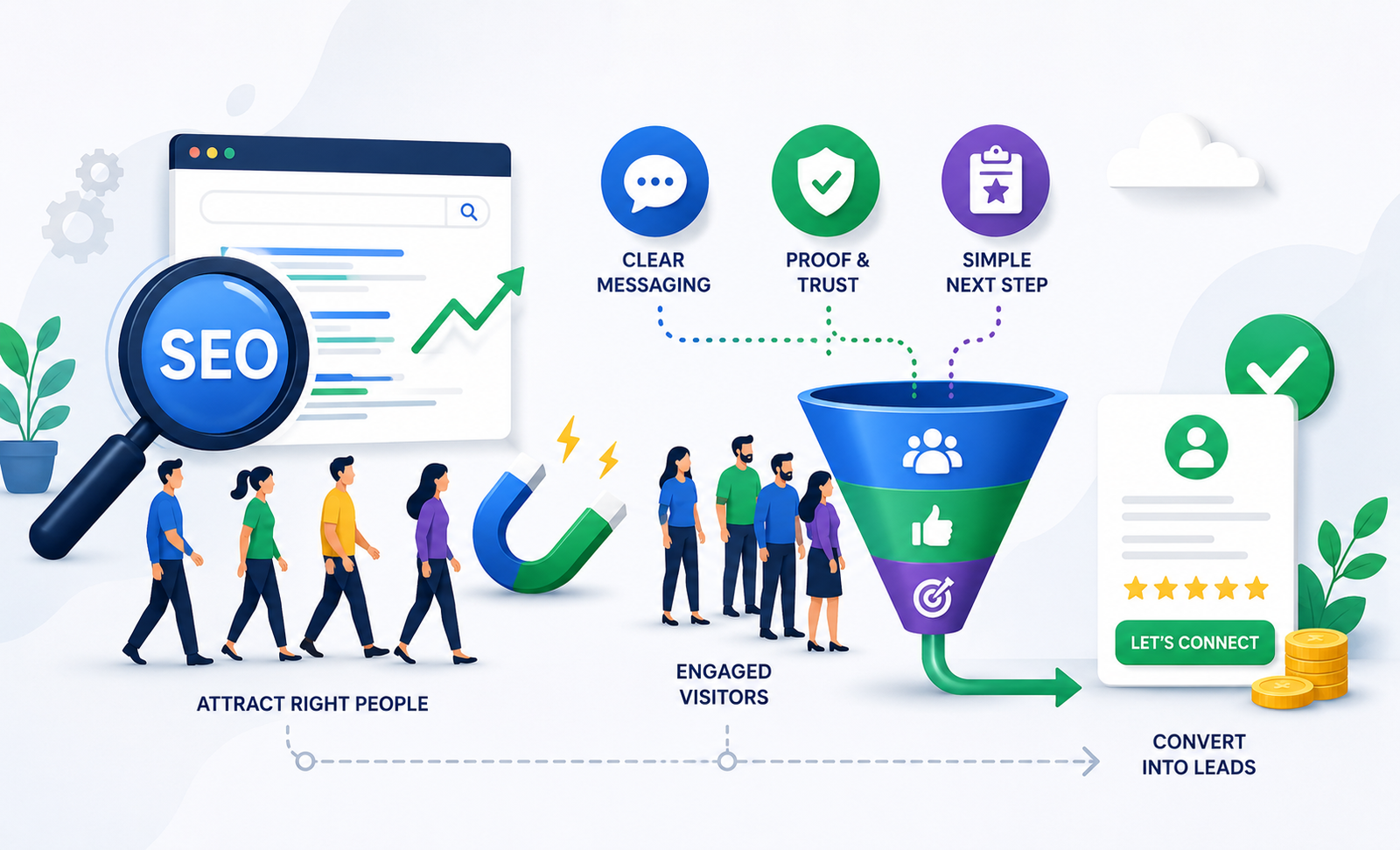
SEO attracts suitable people. Clear messaging, proof and a simple next step help turn those visitors into leads. Focusing on only one side leaves the customer journey incomplete.
How to Measure Website Lead Performance
Page views and traffic trends provide useful context, but they do not show whether your website creates genuine business opportunities.
Begin by defining which actions matter. For one business, the main conversion may be a completed appointment booking. For another, it may be a qualified phone call, estimate request or consultation form.
Track calls, forms, bookings, chats and other meaningful customer actions.
Review whether enquiries match your services, location and ideal customer.
Connect leads to quotations, appointments, opportunities and completed sales.
Track meaningful website actions
- Contact form submissions
- Quote or estimate requests
- Appointment bookings
- Phone-number clicks
- Email clicks
- Live-chat conversations
- Resource or guide downloads
- CRM-qualified opportunities
Google Analytics can help record important website actions. The official Google Analytics platform can be used to review your current measurement setup.
Tracking should continue after the form submission. A submission is not automatically a qualified lead, and a qualified lead is not automatically a customer. Website data should connect with your CRM, pipeline or sales process wherever possible.
Review performance by page and source
An overall conversion rate can hide important differences. A blog article may receive high traffic and produce few direct enquiries. A focused service page may receive less traffic and generate several valuable calls.
Review:
- Which landing pages create enquiries
- Which sources produce qualified leads
- Which services receive attention but no action
- Where visitors leave the enquiry process
- How mobile results compare with desktop
- How quickly the team responds to new leads
Measure quality, not only volume
Ten low-quality submissions may be less valuable than two enquiries from ideal customers. Measure service fit, customer quality and sales outcome rather than form volume alone.
Website Lead-Generation Checklist
Use this checklist to review whether your website gives suitable visitors enough clarity, trust and confidence to contact your business.
Review these 16 points
- The homepage explains the main service and ideal customer.
- Your service area or target location is clear.
- Each major service has a dedicated page.
- The opening message explains a customer benefit.
- Important pages have one primary call to action.
- The phone number is easy to find and tap on mobile.
- Contact forms are short and easy to complete.
- Reviews and proof appear near decision points.
- The About page includes real people and business details.
- The website works properly on common mobile screens.
- Pages load without unnecessary visual delays.
- Blog posts link naturally to relevant service pages.
- Service pages answer common customer questions.
- Calls, forms and booking actions are tracked.
- New leads enter a clear follow-up process.
- Important content is reviewed and updated regularly.
Do not change everything without understanding where the real weakness is. Begin with the pages receiving the most relevant traffic or supporting your most valuable services.
YeasinWEB’s website, SEO and digital growth services connect visibility, lead capture, tracking and follow-up rather than treating them as unrelated activities.
When Should You Request a Website Audit?
A website audit is valuable when performance is weak but the main cause is unclear. The problem may involve traffic quality, content, technical setup, user experience, conversion design or tracking.
Consider a structured website review when:
- Your website receives traffic but generates few enquiries
- Visitors reach service pages but do not contact you
- You cannot identify where leads come from
- The website performs poorly on mobile devices
- Your services have changed but the content has not
- Local competitors appear more credible online
- You are preparing to invest in SEO or advertising
- Forms and bookings are not connected to follow-up
A useful audit should not simply provide a long list of technical warnings. It should prioritize issues according to business impact and explain which improvements deserve attention first.
Find out why your website is not generating enough leads
Request a YeasinWEB website audit to identify weaknesses in your messaging, service pages, SEO, trust signals, conversion path and tracking setup.
Get Your Free Website AuditFinal takeaway
More traffic will not repair a weak conversion journey. Improve the connection between what customers search for, what your pages communicate, why visitors should trust you and how easily they can take action.
Common questions
Frequently Asked Questions
These answers address common questions from business owners whose websites attract visitors but produce too few enquiries.
Why is my website getting traffic but no leads?
Your website may be attracting visitors with weak buying intent, presenting an unclear offer, lacking trust signals or making the enquiry process difficult. Review traffic sources, landing pages, service content, calls to action, mobile usability and conversion tracking together.
What is a good website conversion rate for a service business?
There is no universal conversion rate for every service business. Results vary according to service type, traffic intent, price, location and the action being measured. Compare performance by landing page and lead quality rather than relying on one general benchmark.
How can I tell whether my website attracts the wrong traffic?
Review the search queries, locations, landing pages and traffic sources bringing visitors to the website. Traffic may be poorly targeted when visitors are outside your service area, search for unrelated information or reach pages that do not match a commercial service need.
Which website page should I improve first?
Begin with a high-value service page that already receives relevant traffic but generates few enquiries. Improving a commercially important page often creates more immediate value than redesigning low-traffic pages without a clear business purpose.
Can SEO generate more leads without a complete website redesign?
Yes, when the existing website has a usable foundation. Improving service content, local relevance, internal links, calls to action and tracking may increase results without a complete rebuild. A redesign becomes more appropriate when technical, structural or mobile problems limit progress.
How long does it take to improve website lead generation?
Some improvements, such as fixing a broken form or making the primary call to action clearer, can affect performance quickly. SEO, content authority and local visibility generally require ongoing work. Reliable tracking should be installed before judging the results.
Website growth audit
Turn your website into a clearer path from visitor to enquiry.
YeasinWEB can review your website’s messaging, service pages, search visibility, trust signals, conversion path, tracking and lead follow-up system to identify what deserves attention first.